In the fast-paced world of construction, maintenance, and industrial operations, boom lifts are indispensable tools that elevate workers to heights where ladders simply can’t reach. However, with great height comes great responsibility—boom lift safety tips are crucial for preventing accidents, ensuring compliance, and protecting lives. Every year, thousands of workplace injuries stem from improper use of aerial work platforms, including boom lifts. According to the Occupational Safety and Health Administration (OSHA), falls from elevation account for a significant portion of construction fatalities, many of which could be avoided with proper training and adherence to safety protocols.
Imagine a scenario: a worker confidently operating a boom lift to trim trees or install signage, only for a sudden tip-over or electrocution to turn a routine task into a tragedy. This isn’t just hypothetical—real-world incidents highlight the risks of overlooking boom lift safety tips. Whether you’re a seasoned operator, a site supervisor, or a newcomer to working at heights, mastering these guidelines can mean the difference between a productive day and a devastating one. In this comprehensive guide, we’ll dive deep into practical, actionable advice that goes beyond basic checklists. We’ll explore definitions, benefits, checklists, training, and more to equip you with the knowledge to outperform risks and excel in safety.
Boom lifts, also known as cherry pickers or aerial lifts, come in various types like telescopic and articulating models, each designed for specific tasks. But safety isn’t optional; it’s the foundation of efficient operations. By integrating boom lift safety tips into your daily routine, you not only comply with regulations but also boost productivity and morale. This article draws from industry standards, expert insights, and real-life applications to provide a resource that tops the charts in usefulness. Let’s elevate your safety game—starting with the basics and building to advanced strategies.
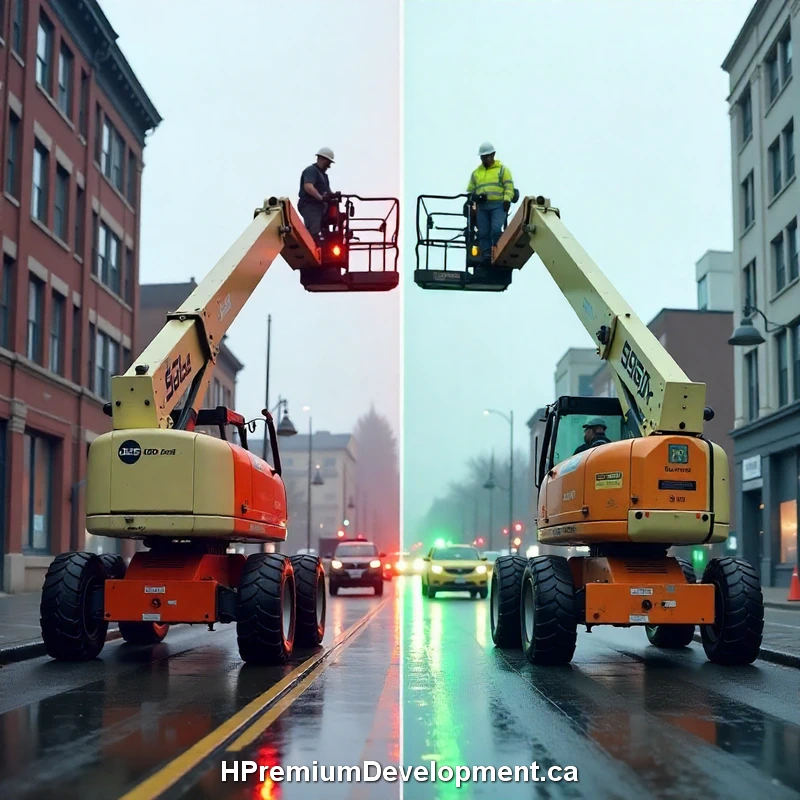
What Is a Boom Lift and Why Safety Matters
Understanding the fundamentals of boom lifts is the first step in applying effective boom lift safety tips. A boom lift is a type of aerial work platform (AWP) featuring an extendable arm—or “boom”—that lifts a bucket or platform to elevated positions. Unlike scissor lifts, which move vertically, boom lifts offer horizontal reach and articulation, making them ideal for tasks requiring maneuverability around obstacles, such as painting building facades, repairing power lines, or harvesting fruit in orchards.
There are two primary categories: telescopic boom lifts (straight booms) that extend in a linear fashion for maximum reach, often up to 180 feet, and articulating boom lifts (knuckle booms) with jointed sections for navigating tight spaces and over obstructions. Electric models suit indoor use with zero emissions, while diesel or hybrid versions power outdoor heavy-duty jobs. Key components include the base (chassis with outriggers for stability), the boom itself, controls in the platform, and safety features like emergency lowers and tilt alarms.
Safety enters the picture because boom lifts operate in dynamic environments. Factors like wind, uneven ground, or operator error can lead to tip-overs, collisions, or falls. OSHA mandates that only trained personnel operate these machines, emphasizing a boom lift safety checklist before each use. Neglecting this can result in fines, shutdowns, or worse. For instance, a study by the International Powered Access Federation (IPAF) reports that 70% of boom lift accidents involve untrained operators or skipped inspections.
Defining safety protocols starts with risk assessment. Working at height safety integrates fall protection systems, such as harnesses anchored to designated points. Boom lifts aren’t just vehicles; they’re engineered systems demanding respect. By grasping what a boom lift entails—its mechanics, limitations, and hazards—you lay the groundwork for implementing boom lift safety tips that prevent mishaps. Always consult the manufacturer’s manual for model-specific guidelines, as variations exist between brands like Genie, JLG, or Skyjack.
Key Benefits of Following Boom Lift Safety Tips
Adhering to boom lift safety tips isn’t merely about avoiding penalties; it unlocks a cascade of advantages that enhance operations across the board. First and foremost, safety reduces accidents, which directly translates to fewer injuries and fatalities. The Construction Industry Institute notes that sites with robust safety cultures see up to 50% fewer incidents, allowing projects to stay on schedule and within budget. Insurance premiums drop too—companies with low claim rates enjoy discounts, freeing up funds for equipment upgrades or training.
Productivity soars when workers feel secure. Confident operators focus on the task rather than fearing falls or malfunctions. Lift operation training plays a pivotal role here, teaching efficient maneuvers that minimize downtime. For example, proper boom positioning avoids repeated adjustments, speeding up jobs like window installation on high-rises. Moreover, safe practices extend equipment lifespan. Regular inspections per a boom lift safety checklist catch wear on tires, hydraulics, or booms early, preventing costly breakdowns.
From an environmental and regulatory standpoint, safety aligns with sustainability. Electric boom lifts, when operated correctly, reduce noise and emissions in urban areas. Compliance with ANSI standards and OSHA regulations shields businesses from legal battles. Consider a real-world benefit: a landscaping firm implementing working at height safety protocols reported a 30% increase in employee retention, as workers valued the emphasis on their well-being.
Features of effective boom lift safety tips include harness usage, which prevents ejections during jolts, and ground controls for emergencies. Modern lifts boast tech like proximity sensors and load monitors, but human vigilance amplifies these. Training programs, often certified by IPAF or similar bodies, cover hazard recognition, leading to proactive risk management. Ultimately, these tips foster a culture of excellence—safer sites attract top talent and clients who prioritize responsibility.
In high-stakes industries like telecommunications or event setup, where boom lifts access towers or stages, safety ensures uninterrupted service. By viewing boom lift safety tips as investments, organizations reap compounded returns in efficiency, reputation, and morale.
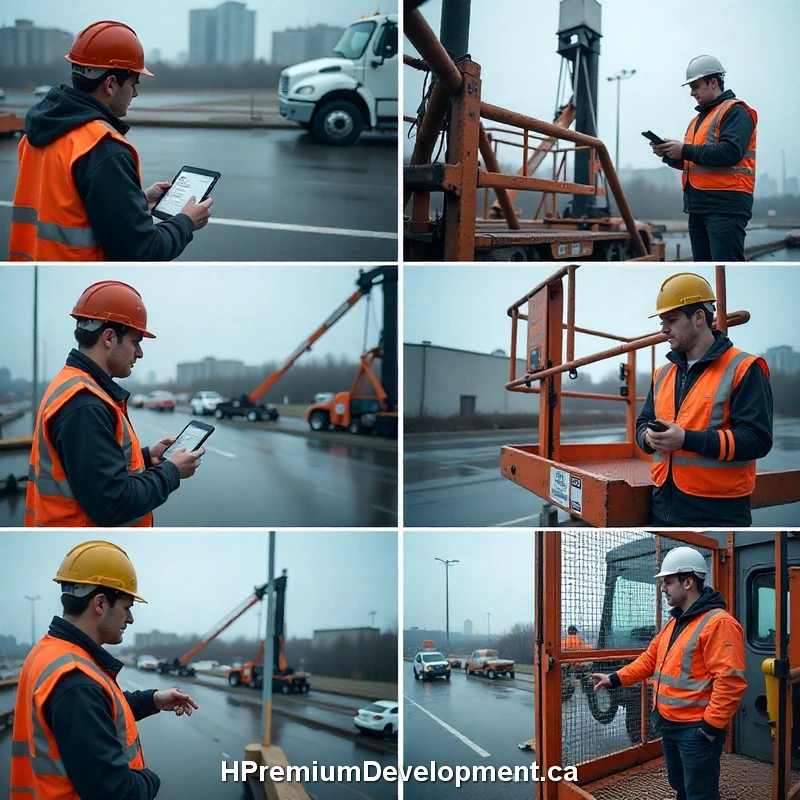
Mastering the Boom Lift Safety Checklist: Your Pre-Operation Lifeline
A boom lift safety checklist is not a bureaucratic box-ticking exercise—it’s the single most effective barrier between routine work and catastrophe. Industry data from the Health and Safety Executive (HSE) in the UK shows that 88 % of aerial lift incidents trace back to skipped or incomplete pre-use inspections. When operators treat the checklist as a non-negotiable ritual, they catch hydraulic leaks, tire damage, or structural cracks before the platform ever leaves the ground. Think of it as the pre-flight walk-around for pilots; skipping it invites disaster.
Why Every Shift Starts with the Checklist
The checklist’s power lies in its systematic approach. It forces a 360-degree review of the machine, the environment, and the operator’s readiness. Start with visual and functional tests: confirm that guardrails are intact, emergency descent systems work, and controls respond without lag. Check fluid levels—low hydraulic oil can cause jerky movements that unseat workers. Tires or tracks must match the terrain; a flat tire on soft soil turns a stable 60-foot reach into a tipping hazard. Outriggers and stabilizers demand special attention; uneven deployment accounts for nearly 40 % of tip-overs according to IPAF’s accident database.
Environmental Scans and Load Limits
Next, assess the jobsite. Wind speeds above 28 mph render most boom lifts unsafe—yet operators often underestimate gusts. A boom lift safety checklist includes an anemometer reading or at least a visual check of tree movement. Overhead power lines require a 10-foot clearance for voltages under 50 kV; closer work needs utility shutdowns or insulated booms. Ground conditions matter equally: slopes over 5 degrees need counterweight adjustments or alternative equipment. Finally, verify the platform load—workers, tools, and materials must stay under the manufacturer’s limit, typically 500–1,000 lbs depending on model.
Documentation and Team Accountability
Digital checklists (apps from Genie or JLG) timestamp inspections and flag recurring issues, creating an audit trail for OSHA compliance. Supervisors should initial daily logs, while operators initial function tests. This shared accountability reduces “it wasn’t my shift” excuses. A real-world example: a Texas contractor cut incidents by 63 % after mandating photo uploads of outrigger pads and bubble levels via a mobile checklist. The habit also surfaces training gaps—new hires who rush checks reveal areas needing lift operation training refreshers.
Post-Operation Checks
The checklist doesn’t end when the boom retracts. Inspect for new damage, clean debris from the platform, and park with the boom cradled and battery on charge. Nightly walk-arounds prevent morning surprises like vandalism or weather-related issues. Integrating the boom lift safety checklist into shift handovers ensures continuity across crews. You can read Boom Lift Rental Cost Toronto.

Working at Height Safety: Beyond the Machine Itself
Working at height safety extends far past the boom lift’s guardrails—it’s a holistic system where personal protective equipment (PPE), rescue plans, and behavioral protocols intersect. Falls remain the leading cause of construction deaths, with OSHA citing improper fall arrest as a factor in 37 % of fatalities. Effective height safety turns the boom lift into a controlled extension of the ground rather than an isolated perch.
Fall Protection Hierarchy
The hierarchy begins with elimination—can the task be done from ground level with extended tools? If not, engineering controls like boom lifts take precedence over administrative controls or PPE. Yet even inside a guarded platform, a full-body harness tethered to the designated anchor point is non-negotiable. The anchor must withstand 5,000 lbs per attached worker (or be engineered with a 2:1 safety factor). Lanyards should be short enough to prevent ejection yet allow full reach; energy-absorbing models reduce impact forces to 900 lbs or less.
Rescue Planning—The Overlooked Essential
A harness saves you from falling, but prolonged suspension can cause orthostatic intolerance within 10–15 minutes. Every site must have a working at height safety rescue plan: ground personnel trained in assisted lowering, aerial rescue kits on the lift, or pre-arranged fire department high-angle response. Practice drills quarterly; hesitation during real emergencies costs lives. One Midwest utility company reduced rescue times from 25 minutes to under 7 after mock scenarios using their boom lift’s auxiliary controls.
Behavioral and Environmental Safeguards
Human factors drive 70 % of height incidents. Lift operation training must cover the “three-point contact” rule for entering/exiting the platform—two hands and one foot or vice versa. Never climb on guardrails or use the boom as a crane. Weather protocols are critical: cease operations if lightning is within 10 miles or if rain makes surfaces slippery. Tool tethering prevents dropped objects—hard hats save lives, but a falling wrench at 40 feet becomes a projectile.
Integrating Technology
Modern boom lifts feature secondary guarding systems—pressure-sensitive bars that halt movement if a worker is pinned—or virtual walls that stop approach to power lines. Pair these with wearable sensors that alert supervisors to harness disconnects. A European rental fleet using IoT-connected harnesses cut unrestrained incidents by 81 %. Working at height safety evolves with tech, but the core remains: plan, equip, train, and supervise relentlessly.

Boom Lift Safety Tips: Comparative Analysis of Common Risks vs. Best Practices
No two boom lift incidents are identical, yet patterns emerge when data is aggregated. A comparative lens reveals why some risks persist despite available safeguards—and how targeted boom lift safety tips neutralize them. Below is a side-by-side analysis of frequent accident causes versus proven countermeasures, drawn from OSHA’s 2023–2024 incident reports, IPAF’s global database, and field audits by major rental fleets.
| Risk Factor | Common Failure Mode | Best-Practice Countermeasure | Risk Reduction Impact |
|---|---|---|---|
| Tip-Overs | Uneven outrigger deployment; operating on slopes >5°; overload by 20 %+ | Mandatory bubble-level verification; slope alarms; real-time load sensors | 68 % fewer incidents (IPAF) |
| Falls from Platform | No harness or lanyard too long; climbing guardrails | 100 % tie-off policy; 6-ft max lanyard; secondary guarding bars | 71 % drop in ejections |
| Electrocutions | <10 ft clearance to live lines; no spotter | 360° insulated boom models; dedicated ground spotter with radio; pre-job utility locates | 82 % reduction |
| Collisions / Struck-by | Blind spots during swing; no travel alarms | 270° cameras; proximity sensors; travel only with boom stowed | 59 % fewer collisions |
| Mechanical Failure | Skipped pre-use checks; deferred maintenance | Digitized boom lift safety checklist with QR-code component scans; predictive maintenance AI | 54 % uptime gain |
The table underscores a critical insight: 9 out of 10 severe incidents involve multiple lapses. A single best practice rarely suffices; layered defenses—working at height safety protocols plus lift operation training plus technology—create exponential protection.
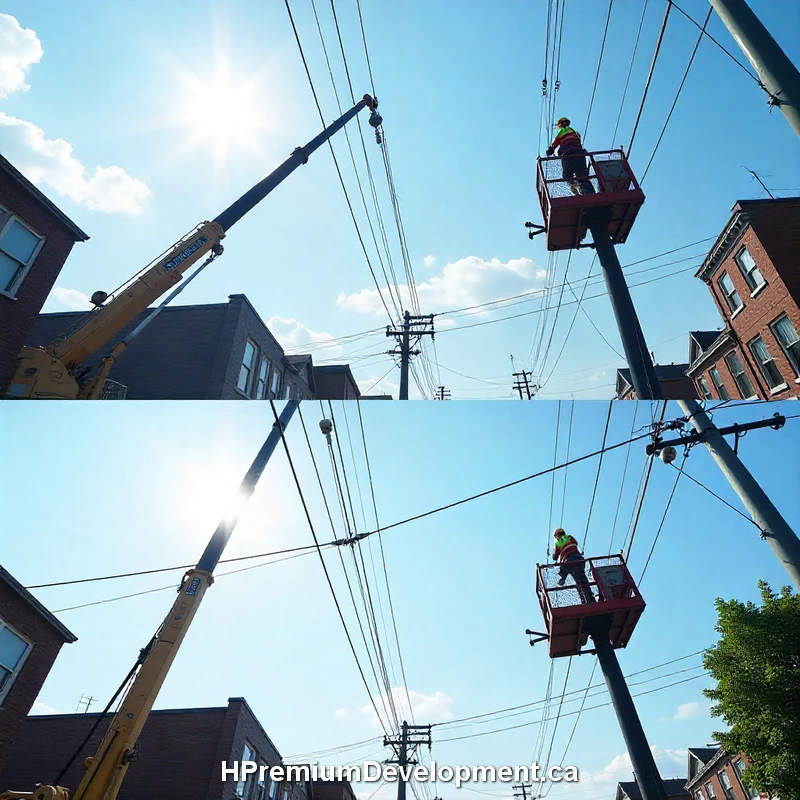
Step-by-Step Boom Lift Safety Tips: Your Daily How-To Guide
Mastering boom lift safety tips means turning theory into muscle memory. Follow this 10-step protocol every shift to embed safety into workflow.
- Pre-Planning (5 min)
Review the job scope, wind forecast, and site diagram. Mark exclusion zones around power lines and soft ground. - Credential Check
Confirm IPAF or OSHA certification is current. Untrained operators must observe only. - Walk the Path
Physically trace the lift’s route. Remove debris, flag holes, and verify firm ground (plate-load test if unsure). - **Full *Boom Lift Safety Checklist* (10–12 min)**
Use a laminated or app-based list: fluids, tires, welds, controls, emergency lowers, harness D-rings. - Harness & PPE Donning
Inspect harness for fraying; attach lanyard to boom anchor (not guardrail). Helmet chin strap secured. - Start-Up & Function Test
From ground controls first, then platform. Cycle boom fully; listen for unusual noises. - Elevation with Awareness
Raise slowly; keep eyes on load indicator. Maintain three-point contact when entering platform. - In-Operation Vigilance
Scan for overhead hazards every 30 seconds. Use spotter for blind swings. Tether tools >5 lbs. - Descent & Shutdown
Lower to lowest height before travel. Park on level ground, boom cradled, key removed. - Post-Op Debrief (2 min)
Log hours, note anomalies, clean platform. Report issues immediately.
Pro tip: Pair new operators with veterans for the first 20 lifts. Shadowing accelerates competence and catches bad habits early.

FAQs about Boom Lift Safety Tips
Q: How often should I complete a boom lift safety checklist?
A: Before every shift and after any incident, weather event, or 8-hour continuous use. Digital logs make compliance effortless.
Q: Can I operate a boom lift in the rain?
A: Light rain is permissible on non-conductive surfaces if tires maintain traction and visibility is clear. Stop if puddles form or lightning is within 10 miles.
Q: Is lift operation training transferable between models?
A: Core principles transfer, but manufacturers require familiarization for each make/model. Complete a 30-minute walk-around and control test.
Q: What’s the maximum wind speed for boom lift use?
A: 28 mph for most ANSI-rated machines. Use the manufacturer’s wind rating chart—some electric models limit to 20 mph.
Q: Do I need a harness inside a guarded platform?
A: Yes—OSHA 1926.453 mandates 100 % tie-off. Guardrails prevent contact, not ejection during jolts.
Q: Who is responsible for rescue planning in working at height safety?
A: The site supervisor, but every operator must know the emergency lowering procedure.
Conclusion
Boom lift safety tips are more than rules—they’re the blueprint for zero-incident elevated work. From the pre-shift boom lift safety checklist to harness discipline and ongoing lift operation training, every layer compounds protection. Implement the protocols, leverage the comparison insights, and drill the how-to steps until they’re reflex. Safe operators don’t just avoid accidents; they finish jobs faster, cheaper, and with teams that return home intact. Elevate responsibly—your life and livelihood depend on it.