In the bustling construction landscape of Toronto, where skyscrapers pierce the skyline and urban renewal projects never sleep, accessing heights safely and efficiently is paramount. Whether you’re a contractor tackling a high-rise facade, a facility manager maintaining commercial properties, or a homeowner embarking on a ambitious renovation, understanding boom lift rental cost Toronto can make or break your budget. Boom lifts, also known as cherry pickers or aerial work platforms, provide the reach and stability needed for tasks that ladders simply can’t handle. But how much does it really cost to rent one in the Greater Toronto Area (GTA)?
The boom lift rental cost Toronto varies widely based on factors like lift height, fuel type, rental duration, and seasonal demand. On average, daily rates start from $250 for smaller models and can climb to $800 or more for specialized 60+ foot units. Weekly and monthly rentals often slash costs by 40-60%, making longer-term projects more economical. In a city like Toronto, where permits, traffic, and weather add layers of complexity, renting from reputable local providers ensures you get equipment that’s inspected, insured, and compliant with Ontario’s safety standards.
This guide dives deep into everything you need to know about boom lift rental cost Toronto, from breakdowns of pricing to tips for saving money. We’ll explore secondary concerns like how much to rent a boom lift in general, daily boom lift rental rates, and specifics on 60 ft boom lift cost. By the end, you’ll be equipped to make informed decisions that keep your project on track without overspending. Let’s elevate your knowledge and get started.
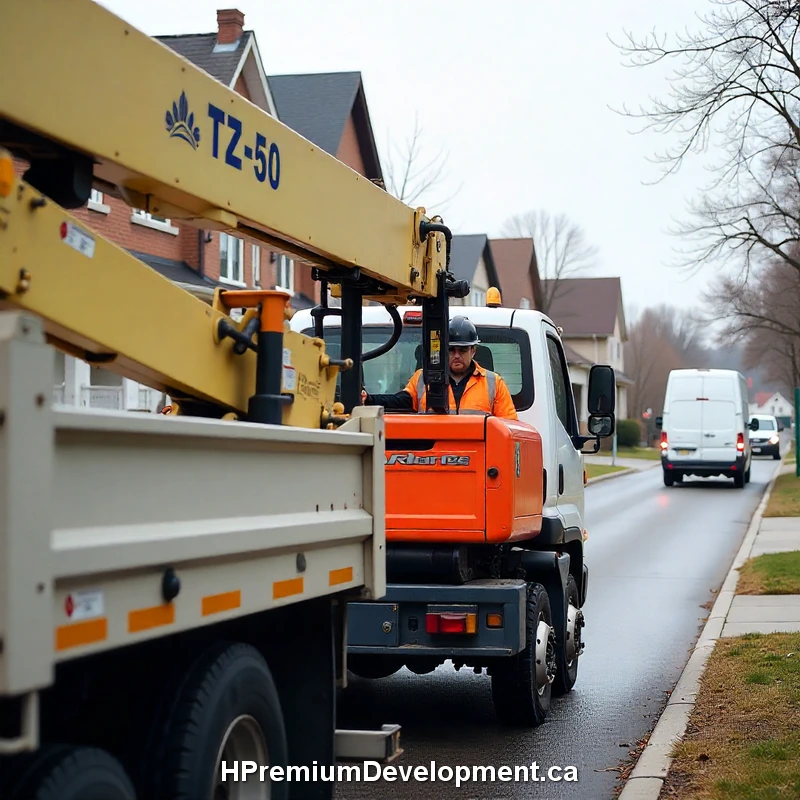
What Is a Boom Lift and Why Does Rental Cost Matter in Toronto?
A boom lift is an essential piece of elevated work equipment featuring an extendable arm (or “boom”) with a platform at the end, allowing workers to reach heights safely. Unlike scissor lifts, which move vertically, boom lifts offer articulating or telescopic arms for precise positioning over obstacles. In Toronto, these machines are indispensable for construction, window washing, tree trimming, signage installation, and film productions.
Defining the boom lift rental cost Toronto starts with understanding the types available: towable boom lifts (easy to transport, ideal for smaller jobs), electric boom lifts (quiet and emission-free for indoor use), and diesel or hybrid models (powerful for outdoor rough terrain). Rental costs in Toronto are influenced by the city’s high demand—think ongoing condo developments in areas like Yorkville or infrastructure upgrades along the Gardiner Expressway.
Local regulations under the Occupational Health and Safety Act (OHSA) mandate operator training and equipment certification, which reputable rental companies bundle into their pricing. Ignoring these can lead to fines or accidents, inflating your overall expenses. For instance, a basic 30-40 ft towable boom might rent for $200-300 daily, but add delivery fees in traffic-congested Toronto, and you’re looking at $50-150 more.
Toronto’s market is competitive, with providers like United Rentals, Sunbelt Rentals, and local outfits such as Battlefield Equipment Rentals offering fleets tailored to urban challenges. Costs also fluctuate with seasons—summer peaks drive up daily boom lift rental rates due to construction booms, while winter might offer discounts but contend with snow and ice hazards requiring specialized tires or enclosures.
In essence, grasping boom lift rental cost Toronto isn’t just about the sticker price; it’s about value. Renting avoids the $50,000+ purchase price of a new unit, plus maintenance and storage headaches in space-limited Toronto. This makes rental a smart choice for 90% of users, per industry estimates.
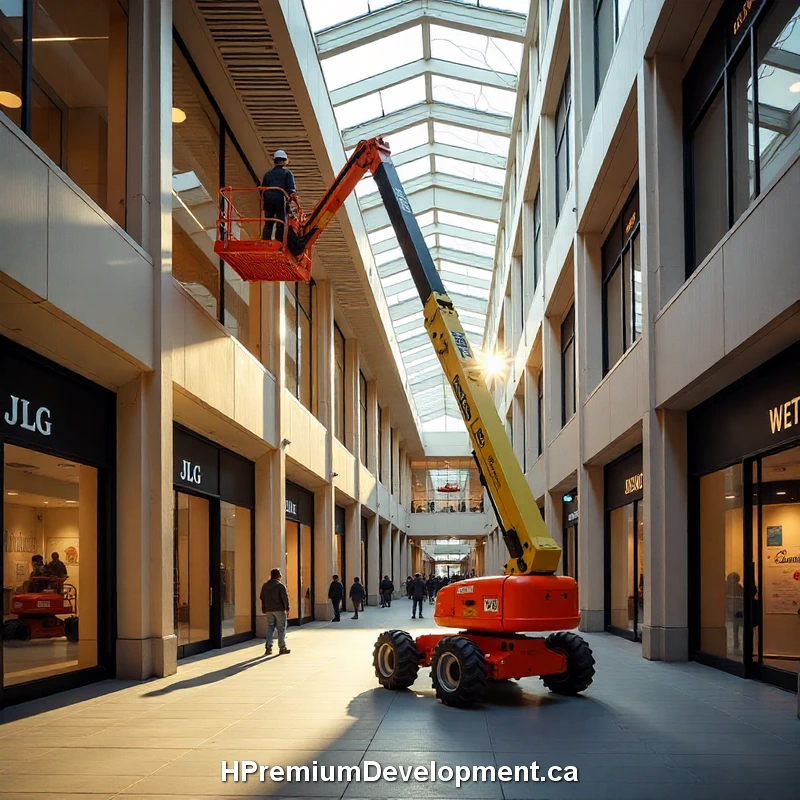
Key Benefits and Features Impacting Boom Lift Rental Costs in Toronto
Renting a boom lift in Toronto unlocks numerous advantages that directly tie into cost efficiency and project success. First, versatility stands out—telescopic booms extend straight for maximum reach (up to 180 ft in premium models), while articulating “knuckle” booms navigate around corners, perfect for Toronto’s dense downtown environments. This flexibility reduces the need for multiple machines, lowering your overall boom lift rental cost Toronto.
Safety features are non-negotiable and baked into rental pricing. Modern units come with fall protection, emergency lowering systems, and tilt alarms, complying with CSA standards. Rental companies handle inspections, ensuring you’re not liable for wear-and-tear failures. In Toronto, where WSIB claims for falls are scrutinized, this peace of mind is invaluable.
Fuel efficiency impacts costs too. Electric models, popular for indoor jobs at places like the Eaton Centre, run on batteries with zero emissions, keeping how much to rent a boom lift lower for eco-conscious projects (around $300-500 daily). Diesel options for outdoor sites offer more power but higher fuel surcharges—factor in $20-50 per day.
Platform capacity is another feature-driven cost factor. Standard platforms hold 500 lbs (two workers plus tools), but jib extensions or material handlers add $100+ to rates. For Toronto’s film industry or event setups at Rogers Centre, these extras justify the expense.
Mobility features like four-wheel drive and oscillating axles handle GTA’s potholed roads and construction sites, preventing downtime that could cost thousands in delayed labor. Rental inclusions often cover training, which is crucial—certified operators command higher wages, but self-operation (with proper creds) saves on that.
Long-term benefits shine in scalability. Weekly rates drop daily boom lift rental rates significantly—e.g., a $400 daily unit might be $1,200 weekly (effective $171/day). Toronto providers offer 24/7 support, minimizing breakdowns in a 24-hour city.
Ultimately, features like GPS tracking for theft-prone areas or hybrid power for versatility ensure your 60 ft boom lift cost delivers ROI. Choosing the right specs avoids under- or over-paying, optimizing your Toronto project budget.

How Much to Rent a Boom Lift: Breaking Down Real-World Pricing in Toronto
Curious about how much to rent a boom lift in the Greater Toronto Area? The answer isn’t one-size-fits-all, but understanding the pricing tiers and hidden variables turns guesswork into strategy. In 2025, Toronto’s rental market reflects a post-pandemic construction surge, supply-chain stabilization, and rising fuel prices—yet competition among providers keeps rates reasonable for informed renters.
Daily rentals form the baseline for most users. A compact 30–40 ft electric boom lift, ideal for indoor retail fit-outs in Vaughan or Mississauga warehouses, typically runs $250–$350 per day. Step up to a 45–60 ft diesel telescopic model for exterior painting on Etobicoke townhouses, and you’re looking at $400–$600 daily. Ultra-high-reach 80–100 ft units, common on downtown condo projects, push $700–$1,000+. These figures include basic insurance and a full tank or charged battery, but exclude delivery, operator fees, or environmental surcharges.
Weekly packages sweeten the deal. The same 45 ft diesel boom that costs $500 daily often drops to $1,400–$1,800 per week—an effective $200–$257/day, saving 48–60%. Monthly rates shave even more: $3,500–$5,000 for that unit, or roughly $117–$167/day. Toronto contractors on multi-week jobs along the Crosstown LRT or Scarborough subway extension routinely lock in 28-day contracts to maximize savings.
Delivery and pickup fees add $100–$300 round-trip, depending on distance from depots in Concord, Etobicoke, or Scarborough. Traffic congestion around the DVP or 401 during rush hour can trigger “after-hours” surcharges of $75–$150. Fuel policies vary: “full-to-full” is standard, but some providers charge $8–$12/litre for diesel refills if you return low. Electric units avoid this but may include a $50–$100 battery cycle fee for heavy use.
Operator requirements inflate how much to rent a boom lift if you lack certification. CPO-approved training costs $200–$400 per person, though many rental firms offer free familiarization sessions. Hiring a certified operator through the rental company runs $45–$75/hour, often with a 4-hour minimum—quickly adding $180–$300 to a single shift.
Seasonality swings rates 15–25%. Summer (May–September) sees peak demand from roofing, facade work, and festival setups, pushing prices to the upper band. Winter brings discounts—sometimes 20% off—but factor in cold-weather packages (engine block heaters, enclosed cabs) at $50–$100/day. Spring and fall offer the sweet spot for balanced boom lift rental cost Toronto.
Permits matter too. Work over city sidewalks or roads requires a Toronto occupancy permit ($150–$500) and traffic control plans. Rental companies often coordinate this for a $200–$400 admin fee, bundling it into your quote. Ignoring permits risks $500+ fines and project shutdowns.
Accessories bump costs strategically. Material handling jibs (+$75/day), generator welders (+$100/day), or non-marking tires for polished floors (+$50/day) enhance capability without buying separate equipment. GPS tracking, now standard on units over 60 ft, adds theft deterrence at no extra charge from major players.
Comparison shopping reveals gaps. National chains like Herc Rentals or Cooper Equipment offer volume discounts for multi-unit fleets, while local independents such as Ahearn & Soper or Stephenson’s Rental provide faster response times in the GTA core. Online booking platforms aggregate quotes, but phoning for “project pricing” often yields unlisted specials—especially for non-profits or repeat customers.
In short, how much to rent a boom lift hinge on duration, specs, and timing. A savvy Toronto renter budgets 20% above base rates for contingencies, then negotiates weekly locks and bundled delivery to stay under target. The result? Elevated productivity without budget free-fall.
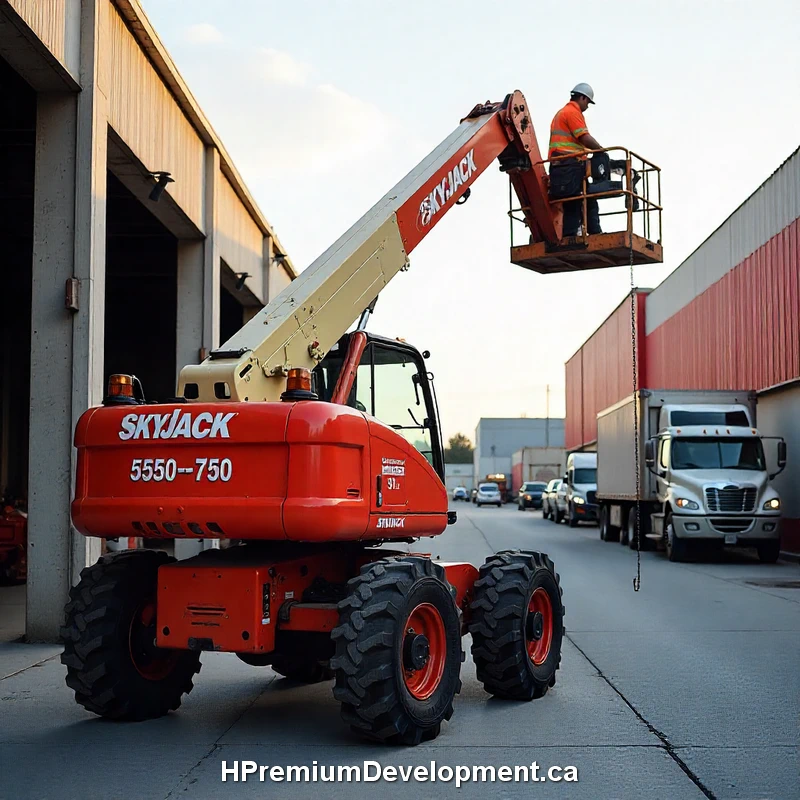
Daily Boom Lift Rental Rates: What to Expect Hour-by-Hour in the GTA
Daily boom lift rental rates dominate short-term projects—think one-off tree pruning in Rosedale, signage swaps at Square One, or emergency repairs after a storm. Toronto’s 24-hour rental day typically starts at 7 a.m. and ends at 7 a.m. the next day, with 8 hours of operation assumed. Exceed that, and overtime kicks in at 10–15% of the daily rate per extra hour.
Entry-level towable boom lifts (19–40 ft) set the floor at $225–$295/day. These trailer-mounted units require only a half-ton truck and SUV hitch, making them favorites for residential contractors in North York or Oakville. No commercial driver’s license needed, and setup takes 15 minutes—ideal for gutter cleaning or holiday lighting.
Mid-range electric articulating booms (40–50 ft) command $350–$475/day. Zero emissions and whisper-quiet operation suit indoor arenas like Scotiabank Arena or hospital retrofits in Sunnybrook. Narrow chassis (under 6 ft wide) navigate tight loading docks, while 30–35% gradeability handles ramps. Battery life spans 6–8 hours; rental includes overnight charging at your site or a swap-out service for $75.
+1 (647) 323-3795
Rough-terrain diesel straights (60–80 ft) form the workhorse category at $550–$750/day. Four-wheel drive, foam-filled tires, and oscillating axles conquer muddy condo sites in Liberty Village or gravel lots in Pickering. Horizontal outreach up to 60 ft lets operators clear obstacles without repositioning, saving 1–2 hours daily in labor. Fuel consumption averages 4–6 litres/hour; budget $40–$60 in diesel per shift.
Specialty units push boundaries. 100+ ft telescopics for bridge inspections along the QEW hit $900–$1,200/day, while hybrid bi-energy models (diesel + battery) for mixed indoor-outdoor jobs at Pearson Airport run $650–$850. Track-mounted spider lifts, navigating stairs or sensitive turf at U of T campuses, start at $800/day despite compact 30 ft reach.
Hourly rates exist for ultra-short jobs but rarely save money. Expect $90–$150/hour with a 4-hour minimum—equating to $360–$600 before you’ve blinked. Most providers steer clients toward full-day pricing for flexibility.
Damage waiver (LDW) insurance, usually 12–15% of the rental rate, covers accidental damage but not negligence. Declining it requires proof of $2M liability coverage, common for large contractors but a hurdle for DIYers. Environmental fees ($10–$25/day) fund spill kits and waste disposal, mandated under Ontario’s EPA.
Pickup vs. delivery alters daily boom lift rental rates subtly. Self-pickup from yards in Woodbridge or Brampton shaves $100–$200 off, but factor tow vehicle rental ($80–$150/day) and time lost in traffic. Delivery ensures the unit arrives leveled and anchored, critical on sloped Toronto laneways.
Weekend specials emerge Friday–Monday for $600–$900 flat on mid-size units, targeting event companies rigging lights at Budweiser Stage or film crews on King West. Statutory holidays trigger 1.5x rates unless pre-booked.
Rate locks protect against fluctuations. Sign a 7-day contract on Wednesday, and your daily boom lift rental rates freeze even if weekend demand spikes. Digital contracts via DocuSign speed approval, with payment by credit card or account terms for verified businesses.
Tracking actual usage via telematics (standard on 2024+ models) lets providers prorate fuel or overtime accurately, avoiding disputes. Transparent invoicing—broken into equipment, delivery, fuel, LDW, and taxes—empowers cost control.
Bottom line: daily boom lift rental rates reward preparation. Book mid-week, return full of fuel, and stick to 8 hours to hit the lower price band. Toronto’s rental ecosystem thrives on clarity—ask for itemized quotes and watch savings stack up.
Boom Lift Rental Costs Compared: Toronto vs. Nearby Regions (2025 Rates)
Choosing the right boom lift rental in Toronto often means weighing local pricing against nearby alternatives—especially for contractors willing to transport equipment from Hamilton, Barrie, or even Kitchener-Waterloo. While boom lift rental cost Toronto averages higher due to urban demand, delivery logistics, and permit complexity, regional differences can save 10–25% on identical units. Below is a side-by-side comparison of average daily boom lift rental rates for three common sizes, based on quotes from major providers (United Rentals, Sunbelt, Cooper, and local independents) in Q3–Q4 2025.
| Boom Lift Type | Toronto (GTA Core) | Hamilton / Burlington | Barrie / Simcoe | Kitchener-Waterloo | Key Notes |
|---|---|---|---|---|---|
| 40 ft Electric Articulating | $375–$475 | $325–$410 | $310–$395 | $300–$380 | Toronto includes congestion surcharge; Barrie offers free pickup. |
| 60 ft Diesel Telescopic (Rough Terrain) | $595–$750 | $520–$670 | $500–$650 | $490–$630 | 60 ft boom lift cost drops outside 416/905; fuel not included. |
| 80 ft Diesel Straight Boom | $850–$1,100 | $760–$950 | $725–$910 | $710–$890 | Delivery from Kitchener adds $180–$250 round-trip to Toronto jobs. |
Rates exclude taxes, LDW (12–15%), and environmental fees. Weekly discounts: 45–55% off daily rate across all regions.
Toronto’s premium stems from higher operator wages, stricter municipal permitting (e.g., road occupancy bonds up to $10,000), and depot real estate costs. However, same-day availability and 24/7 emergency support justify the upcharge for downtown projects. Conversely, picking up a 60 ft boom lift from Hamilton saves ~$75–$100/day—but factor in 1.5–2 hours of travel each way, plus potential tolls on the QEW.
For multi-week jobs, regional providers often beat GTA giants on long-term 60 ft boom lift cost. A Kitchener depot might quote $3,800/month delivered vs. $4,500 from a Scarborough yard. The tradeoff? Slower response for repairs and fewer backup units.
Bottom line: If your site is within 30 km of the GTA core and time is critical, pay the Toronto rate. For flexible schedules or suburban jobs, source from 50–100 km out and pocket the savings—especially on daily boom lift rental rates under 7 days.
How to Rent a Boom Lift in Toronto: Step-by-Step Guide & Money-Saving Tips
Securing the best boom lift rental cost Toronto requires strategy, not luck. Follow this proven 7-step process to avoid overpaying and ensure safety compliance.
Step 1: Assess Your Project Needs (Free)
Measure maximum working height, outreach, and surface conditions. Need to clear a 3-story roof with 20 ft of horizontal jut? A 60 ft telescopic is minimum. Indoor polished concrete? Spec electric with non-marking tires. Use manufacturer reach diagrams (Genie, JLG, Skyjack) to avoid under-speccing.
Step 2: Get 3+ Quotes 7–10 Days Ahead
Call or use online portals from Cooper Equipment, Battlefield, and one national (Sunbelt). Ask for:
- Itemized pricing (base + delivery + LDW + fuel policy)
- Weekly/monthly thresholds
- Free site survey (offered by most for jobs over $1,000)
Pro tip: Mention competitor quotes—Toronto reps routinely match or beat by 5–10%.
Step 3: Verify Certifications & Training
Ontario law requires CPO-approved training for operators (CSA B354). Rental firms provide proof of annual inspections (CSA sticker). If self-operating, complete a 1-day course ($250) or use their free 30-minute familiarization.
Step 4: Lock in Duration & Add-Ons
Commit to exact dates. A 5-day rental billed as daily costs 40% more than a weekly package. Bundle delivery/pickup and waive return cleaning fees by pressure-washing onsite ($50 savings).
Step 5: Handle Permits Early
For public property, submit Toronto’s “Road Allowance Permit” 5–7 business days ahead via the city portal. Rental company can file for $150–$300, saving you hours.
Step 6: Inspect on Delivery
Document serial numbers, hour meter, and pre-existing damage with photos. Test all functions (boom, drive, emergency descent). Refuse units with low battery (<80%) or visible hydraulic leaks.
Step 7: Return Smart
Refuel to exact marker (receipt required), fold jib, lower boom fully. Return mid-morning to avoid after-hours fees. Most depots credit unused hours if under 8/day.
Money-Saving Hacks:
- Book Tuesday–Thursday for lowest daily boom lift rental rates
- Split rentals: Use towable for setup, switch to self-propelled for duration
- Join loyalty programs (Cooper’s “Pro Account” = 10% off after $5K spend)
- Negotiate winter storage if ending in November—free 1–2 weeks

FAQs About Boom Lift Rental Cost Toronto
Q: How much to rent a boom lift for one day in Toronto?
A: Expect $250–$450 for a 30–45 ft model, $550–$750 for a 60 ft diesel, up to $1,200 for 100+ ft specialty units. Add 20–30% for delivery, insurance, and taxes.
Q: Is weekend rental cheaper?
A: Not usually—Friday–Monday packages run $600–$900 flat for mid-size booms, but daily rates apply individually on holidays. Book mid-week for true savings.
Q: Do I need insurance to rent a boom lift?
A: Yes. Accept the rental company’s LDW (12–15% of cost) or show $2M general liability + equipment coverage. Personal auto policies rarely suffice.
Q: Can I rent a 60 ft boom lift without an operator?
A: Absolutely—if you’re certified. Most Toronto providers require proof of training; otherwise, they supply an operator at $50–$75/hour (4-hr min).
Q: Are there hidden fees in boom lift rentals?
A: Common add-ons: environmental fee ($15–$25/day), tire damage ($100+), after-hours return ($75), excess wear (hydraulic leaks, paint overspray). Always request itemized contracts.
Q: How far in advance should I book during summer?
A: 2–3 weeks for standard units, 4–6 weeks for 80+ ft or electric narrow models. Last-minute bookings incur 20–50% premiums.
Conclusion
Mastering boom lift rental cost Toronto transforms a potential budget headache into a competitive advantage. From daily rates starting at $250 to strategic monthly locks under $120/day, the GTA offers flexible options for every elevation challenge. By matching equipment to task, negotiating smart, and leveraging regional pricing, you keep projects soaring—safely and profitably. Ready to reach new heights? Contact three providers today, lock your rate, and elevate with confidence.